|
My path to higher
education was long and thorny. Better to say, the path to education. It
began in the Moscow Hydrometeorological College, which is located in
the suburban village of Kuchino, now it is part of the city of
Balashikha. Kuchino is known for the fact that Dmitry Pavlovich Ryabushinsky
lived and worked here, a famous industrialist and scientist. Here,
on the banks of the Pehorka River, was his estate, on the territory of
which he built a complex of buildings for his Aerodynamic Institute.
The Revolution of 1917 stopped all his scientific activity and he
immigrated to France. And he dreamed of space. Someone said about them
- in Russia they would have gone to the sky, and in immigration they
conquered the sky - Sikorsky and many, many other Russian aviators and
engineers.
|
|
|
Recently in the
center of the city Railway Ryabushinsky erected a monument. And what
little remains of his estate is destroyed - a staircase, a fountain, an
ancient building.
|
|
|
In the early 1930s,
the Hydrometeorological College was opened in the building of the main
estate of Ryabushinsky. In this technical school, I entered training in
the specialty "Radio Engineering Hydrometeorological Devices" in 1970
after graduating from the 8th grades of Reutov School No. 2.
|
|
|
The school was
interesting. At that time, the college was a truly professional
educational institution. They went to college well. For failure was
expelled, but the greatest dropout occurred in the 1st year. Our group
did not count a few people that year. By the way, I continued this good
tradition, the expulsion for failure, when, after 15 years, I began to
work as a teacher in the same technical school.
|
|
|
In the first year, we
studied mainly general education subjects: mathematics, physics,
chemistry, German, social studies, Russian language and literature, NVP
- initial military training. The teachers really carried the knowledge
and tried to hammer it into our heads. Best of all I remember the
teacher of mathematics Yakov Abramovich Kletsel. The exam lasted until
10 p.m. You pick up a ticket, you answer, you don't know something, you
go to the hall to teach, and then back to the classroom. Physics was
taught to us by Galina Mikhailovna Rumyantseva, and the class leader
was Alla Valierevna Ponamoreva, an English teacher.
|
|
Most of the time with us
was spent by the teacher of initial military training, Major Alexei
Egorievich Maidanov, a former employee of the 9th KGB Directorate.
Sometimes he told how he worked in the security of Khrushchev,
accompanied him on trips. That was in the early 1960s.
After the first year, he conducted military training at the
hydrological base of the technical school, in Omutishchi, on the banks
of the Klyazma River, in Petushinsky district of the Vladimir region.
And it's always hot in those places in June. March-throw at night,
wearing gas masks on a sandy road through a pine forest! Digging
trenches. And in conclusion - forcing the fords of the river Klyazma.
And the current on Klyazma is strong, full of swirls. There's a reason
this place is called Omutishchi. And then in the morning, from the left
bank to the right, and then from the right to the left. Alexei
Egorievich insures on a boat, if any of us is blown downstream, then he
will be caught. |
|
|
In the second year
there are already special subjects; Electronic devices with the teacher
Patokin, Electrical Engineering with the teacher Lyudmila Ivanovna
Egarmina, who had a favorite expression: "face about the Table".
|
|
|
At the end of the
second year of practice in electrical work. In this practice, we were
taught to solder. It was simple: The teacher showed how to clean the
wire, prepare the soldering iron, clean the stinger, irrigate. And
training. Wires, canifoli, solder was in abundance. Then the test. It
is necessary to weld a cube measuring 100 by 100 mm from copper wire
with a diameter of 1 mm. And each side of the cube is a 10 mm
increments lattice made of the same wire. Imagine how many rations had
to be made. After weeping, you go to the teacher - we taught this
science Ships, as I do not remember the name. I remember one day I
smoked a cigarette and I got so sick that I ran to the bathroom. I
enter the building of the technical school - and meet me the Shipmen
with the words "You walk, Bolgov", and in my stomach with your finger.
|
|
|
(Korabelnikov)Shipmen
took a soldered cube and crushed it with their hands. If, in his
opinion, a lot of delays fell off, you go to your workplace and solder
again. Great school. In radio engineering and electronics, a good
soldering is the key to the reliable operation of the device.
|
|
|
In the third year, we
were taught radio receiving devices by teacher Devin, radio
transmitting devices by teacher Alifanov, the basics of radio
engineering and antennas by teacher Verle. Yuri Sergeevich Verle loved
to preach to us and in general went into demagogy sometimes. He was
particularly good at it on the subject of "Antennas." There was no exam
on this subject, only a test, which was put automatically. Here he
spent hours preaching to us. I wanted him to talk about antennas. And
he felt my displeasure. And it was expressed in the fact that he gave
me 2 points (bad score) on the exam in radio engineering. I didn't know
one "Jet Lamp" question, and I just got one. Although I knew the radios
and all the circuits well, he gave me a 2. I don’t know what he meant
by that, but when I was a teacher at the same college, I never allowed
myself to have any extraneous conversations during lessons on abstract
topics. The example of the teacher Werle gave me an antidote against
this method of work in the technical school. My main task was to keep
the students in mind. And the students wanted to listen to stories that
were abstracted from the themes of teaching. But I used different
methods: compositions, dictations, presentations. This is the subject
of "radar stations", popularly called simply "Stations".
|
|
|
After the 3rd year I
went on an expedition to the Latvian city of Liepaja. My grandmother
called this city Libava. Libava, in the German manner, was called
Liepaja during the Russian Empire.
|
|
|
My school friend
Volodya Kalenov after 10th grade got a job at the Institute of Earth
Physics, named after Otto Yulyevich Schmidt. He's got a job. The
Institute of Earth Physics was a remarkable institution in those
distant years. How many people worked in it! The main building was
located on Bolshaya Gruzinskaya Street in Moscow, and many laboratories
were located in the basements of buildings near the metro station.
There was an area of two-storey buildings built by German prisoners of
war after the World War II.
|
|
|
During the summer,
expeditions traveled throughout the Soviet Union. Volodya went to Garm,
to the Pamir, where the seismological test site was located. In the
department where I settled, there were two polygons - one in the
mountains, in Garma on the Pamirs, and the second at the naval base in
Liepaja, on the basis of vessels of the hydrographic service. I got a
job at a marine gravimetry laboratory, whose squad was traveling to
Liepaja at the end of June. By the way, working on expeditions while
studying at a technical school or institute is a very good school in
education, and in human relationships. Francis Bacon says this very
well in his essay “On Travel.” I recommend everyone read it.
|
|
|
My duties in the
expedition were simple – to do what the head of the expedition
Stanislav Kutkin and other engineers would say. Basically, this is the
assembly of printed circuit boards, soldering wires, locksmithing,
taking readings from gravimeters, accelerometers, etc. The main purpose
of the expedition is to search for oil on the shelf of Lithuania,
Latvia and Estonia by seismological methods. In summer, information was
accumulated in the field, and then in winter it was processed in Moscow.
|
|
|
The first month of
work was almost non-existent, and we spent most of our time on the city
beach, bathing and drinking the great Senchu Alus beer. As I remember,
the bottle cost 33 cents. On the ruble you take 3 bottles, after
drinking, go hand over 3 bottles, they then cost 12 kopecks, and the
money you get another bottle and 3 kopecks of change.
|
|
|
The month flew
quickly, the head of the laboratory Vladimir Town Hall arrived and we
started working. Two weeks later, they assembled the installation and
went to the Liepaja fish factory to install equipment on the base of
the Liepaja lighthouse, which relied on a granite base. While the data
was being recorded, the laboratory staff dispersed around the workshops
of the fish factory to select products for tasting. The food was fresh
and delicious. From tunnel smoke ovens, 20-30 meters long, carts with
smoked cod left. What a smell! What a taste! Herring! There were
barrels of herring in the saline shop. You roll your shirt sleeve up
your shoulder, and you throw the biggest, fattest herring in the
barrel. Then everyone gathered in the room of the lighthouse at the
devices, laid out on the table who brought what, got bread and began
the meal. It was the freshest, excellent quality fishery products..
|
|
|
After checking and
finalizing the scheme, the equipment was installed on the hydrographic
vessel GS-275 of the hydrographic detachment of the
Liepaja-military-naval base. And the ship started moving. My task was
to map the ship's route in the Baltic Sea. I had to take readings of 3
coordinates of the Laurent navigation system and interpolate values,
every few minutes to map the location of the ship, not forgetting to
mark the time. At the same time, seismological data was recorded on
punch tape.
|
|
|
On the expedition to
Liepaja I went by car GAZ-69, an old such, expeditionary. We went in
three: the driver, me and the brother of the driver, who made us a
company to ride to Liepaja. We left Moscow at 6 a.m. I still remember
the empty Minsk highway. Our way went through Minsk, Smorgon, Vilnius,
Kaunas, Klaipeda, Palanga and finally - Liepaja. The whole road took 2
days. After lunch we arrived in Liepaja, which was located in an old
private house. After unloading the car and lunch went to greet the
Baltic Sea. It was my first time in the Baltic. Some of us would go
into the sea in scrubs and then pull them back so the sea wouldn't take
them.
|
|
|
I really liked the
sea. Beautiful beach. Pine trees.
|
|
|
Work went on as
usual. The first of September has arrived. I had to go back to Moscow
and continue my studies at the technical school. But the head of the
expedition Stanislav Semenovich Kutkin asked to stay, and I stayed
until September 20. I flew to Moscow by Yak-40 to Bykovo airport near
Moscow. This was my second flight on a plane in my life. Back at
college. It's nothing new. The main subject is radar stations, which
was read by the deputy director of the technical school Belov N.P.
|
|
|
Literally, I read -
dictated to us the description of the blocks of the radar station. It
was possible to stay on the expedition for another month. I wouldn't
lose anything..
|
A small
digression - the station we studied - was practically a copy of the
American radar station created during the Second World War and a number
of these radar stations were transferred to the Soviet Union on
Lend-Lease. More about this in another section. But we weren't told
that in class.
|
|
And before November
7, I went to practice in the glorious city of Frunze, which was at that
time the capital of the Kyrgyz SSR. The four of us went to Penza. We
went to practice in Penza Kolya Byvshev and Petya Baryshevsky.
|
|
|
Kyrgyzstan is
certainly not the Baltics. And I did the right thing that I took the
direction to practice in Kyrgyzstan After Latvia - Kyrgyzstan is a
strong contrast. The Soviet Union was a country that included
completely different territories, completely different from each other,
different in culture, religion, language. And it is probably natural
that such a diverse country disintegrated.
|
|
|
In Frunze, we were
assigned to work as trainees at the Frunze Air Station, setting a
salary of 70 rubles. And plus from the technical school sent a
scholarship of 45 rubles. You could live.
|
|
|
On the eve of the New
Year, when receiving a salary, the head of the air station, a lover of
alcohol, tells me that I withhold from you and Grachkov from your
salary 10 rubles and can fly to Moscow for 10 days. I went to the Osh
Bazaar, bought melon, apples of Alma-Ata, all sorts of Central Asian
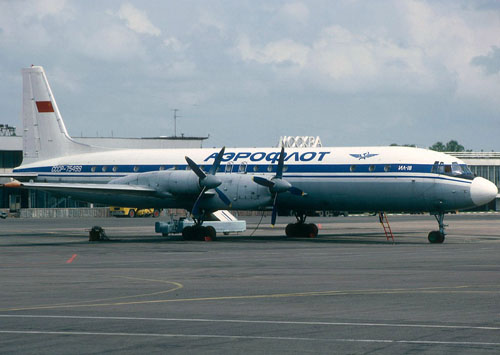
goodies, and on the IL-18 plane Slava Grachkov and I flew to Moscow for
the New Year holidays. In those days, the IL-18 was probably the most
reliable. Takeoff and landing in any weather.
|
|
The Kyrgyz
Hydrometeorological Department has an excellent team. All holidays were
celebrated with fun and light. That was the case on March 8. It was so
well noted that I went to the airport, got on a plane and flew to
Moscow. Fortunately, in the autumn-winter-spring period, there was a
50% discount for students and students on air tickets and railway
tickets. A plane ticket on a student ticket cost 25 rubles.
After 3 days, IL-18 again and back to Frunze.
|
|
|
Working during
training is wonderful. You are not bound by very strict working
conditions, you are viewed as a temporary person, and you have the
opportunity to travel to the surrounding places. So in February, I got
on a plane flying to Tashkent. There lived my father's front-line
friend, Durnev. I wanted to see Tashkent, the city of bread. But he
didn't get to Tashkent right away. The plane, due to the fact that the
weather in Tashkent deteriorated, landed in Shymkent. All passengers
were put on buses and taken to Tashkent. I really liked Tashkent.
|
|
Practice ended
in April. And the practice lasted 6 months. Our group traveled to air
stations throughout the Soviet Union.
Small studies in May and June state examinations. I had to pass 3
exams, which was not difficult. Training at the technical school ended
with a graduation evening in a restaurant near the Reutov station. The
building is still standing. And there seems to be some kind of drinking
establishment.
|
|
|
After graduating from
the technical school, I again went on an expedition to Liepaja. I liked
Latvia. After working on the expedition in early September, I went to
work at the Central High Altitude Hydrometeorological Observatory
(TSVGMO) on the Ostankino TV Tower. Two weeks after starting work, I
meet my classmate Misha Tolstoykh in Moscow. He immediately after
graduating from the technical school went to work at the "Postbox" (the mailbox is a closed
defense enterprise, a secret institute, a military plant, etc.).
And Misha says, "Come to work with us." Let's think. The next day I
went to Human Resources. They gave me a questionnaire. Filled in. A
human resources officer looked at her and said, “Are you not a
Komsomol?” I'm saying no, not Komsomol. The hu`man resources officer
says it's a mess.
|
|
I have to join the
Komsomol. Go and come in.
Here it should be noted that in the group in which I studied at the
hydrometeorological technical school, in the Komsomol members of 25
people, there were only three: Ira Agapova, Nikita Krotkov and I. If
you have to join, you have to. The next day I go to the Komsomol, and I
say that we must urgently join the Komsomol. The answer is no problem.
Komsorg issued all the documents: the decision of the Komsomol meeting,
characteristics, etc. And in the nearest Wednesday, which coincided
with my birthday, after work, we went to Dzerzhinsky district of the
Komsomol to join Bolgov in the Komsomol. On Wednesdays he sat in the
district of the Komsomol, where he was taken to the Komsomol. In the
reception room, we met another comrade who urgently needed to join the
Komsomol in order to get a job at the mailbox (Sharashkin’s office). |
|
|
I was asked why
I had not joined before. Well, you can’t say that even when I was in
school in the third grade, when the teacher said that on the birthday
of Lenin’s grandfather, April 22, everyone should come in white shirts,
Vovochka came in dark.
|
|
|
Result -
accepted. But today to pay entrance fees 10 rubles and get a Komsomol
ticket. Thus, the work experience is 2 weeks - and I am accepted into
the Komsomol. The next day I'm going to Human Resources. Showing the
Komsomol ticket. The human resources officer says, Well done! Now the
next stage. Now I will prepare you a letter to the Dzerzhinsky district
committee of the Komsomol so that they give you a recommendation for
work.
|
|
Next Wednesday,
already alone, without a komsorg, with a brazen face meal in the
Dzerzhinsky district of the Komsomol. And I, without any stupid
questions, give the right recommendation, designed accordingly.
The next day I'm going to Human Resources. They say again, "Good job!"
We need those! Now wait until your security check is over. Call me in a
week.
On October 12, 1974, I went to work at the Sharashkin office.
|
|
Here you ask -
and what the hell was needed all this performance with the entry into
the Komsomol. That's not right. And when he started working, the
performances with joining the party were held regularly. The comrade,
who will be admitted to the party at the party meeting, distributes to
his colleagues papers with questions to which he knows the answers. The
president asks the audience who has questions for the candidate. And
colleagues take turns raising their hands, standing up and asking the
right question. Getting the right answer. The candidate successfully
passed this stage. He is now a candidate for the party. CPSU. And in a
year, if there are no punctures (drunken women, violations of labor
discipline), he will become a full member of the party, and will be
able to move up the official ladder. And without membership in the
party, even a senior engineer was not given.
|
|
I had to go to
institute next year. To do this, I entered the preparatory courses at
Bauman MVTU. Classes were held in the evening, in the school building,
near the metro Baumanskaya. We had a good band. Most of all, we agreed
with Yura Esin. With him, we often visited the bar of the hotel Russia
after classes, where my favorite drink was a vodka with mango. This was
the first step towards higher education. But we had to decide where to
go. I got the papers. And the description went to sign to the head of
the department, in the morning, the day after visiting the bar. The
head of the department looked at me, said, "You gotta eat," and he
signed the profile.
To be continued.
|
|
|
|
|
|
|
|
|
|
|